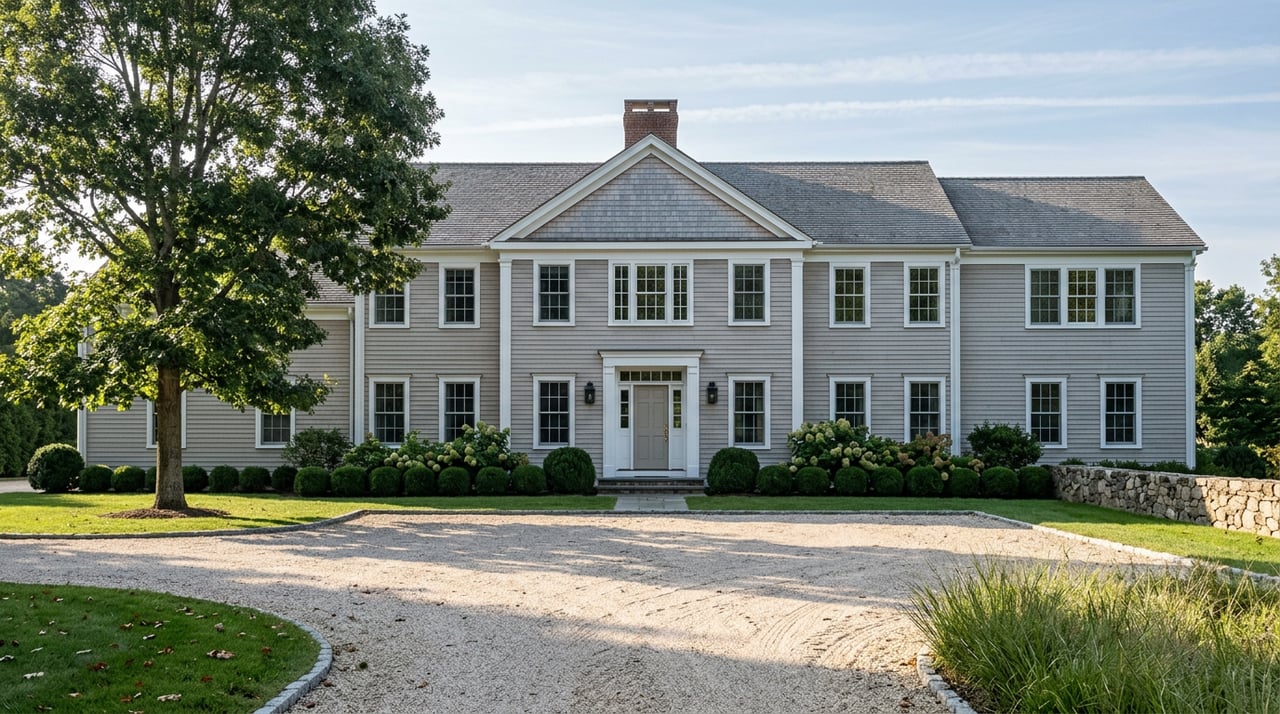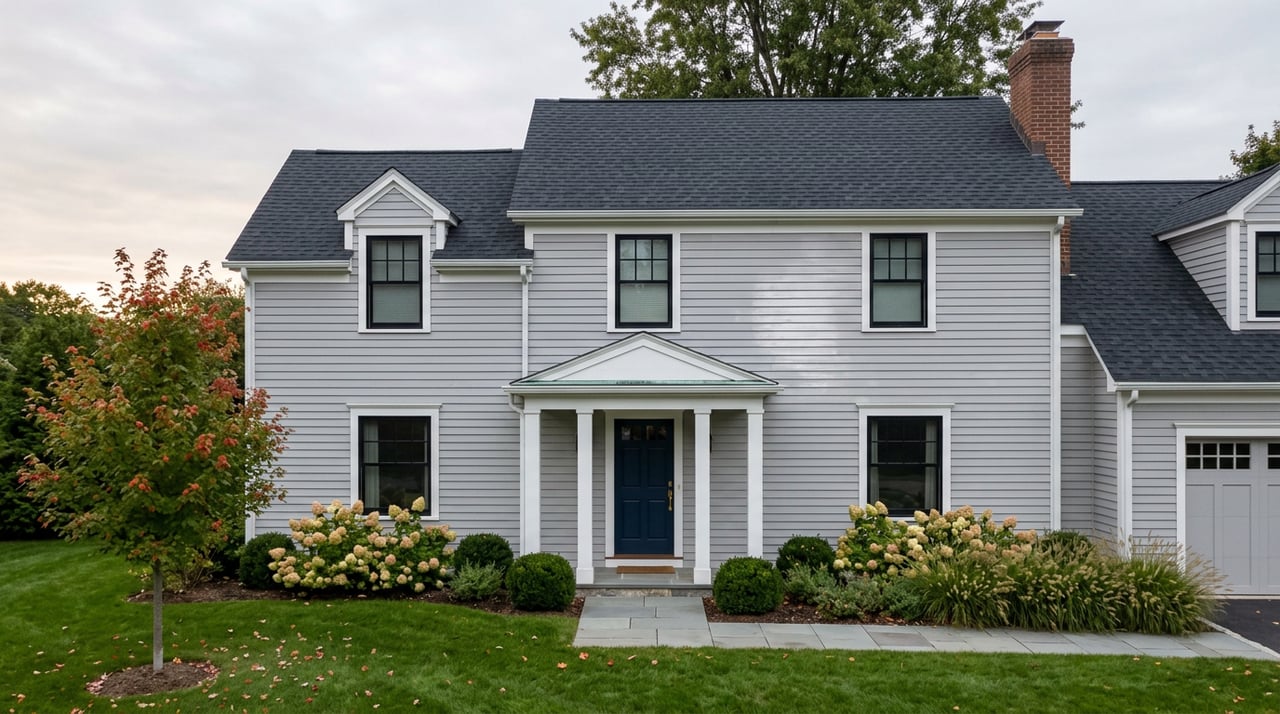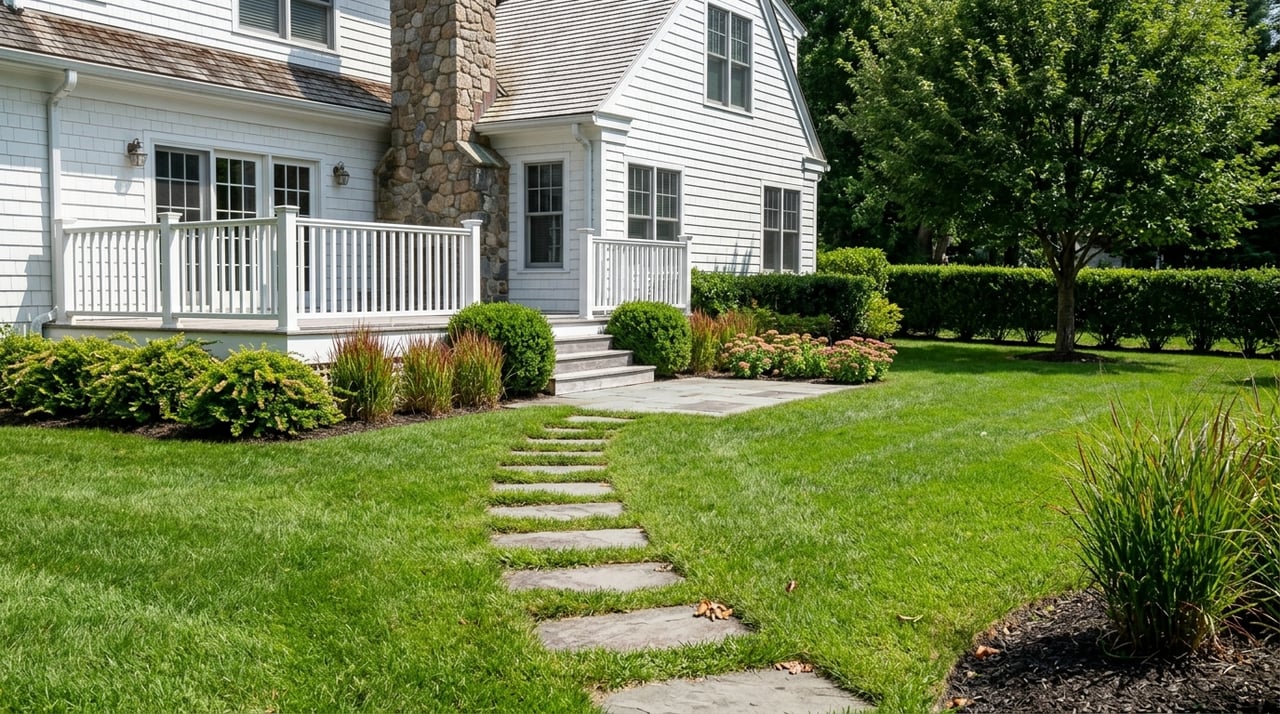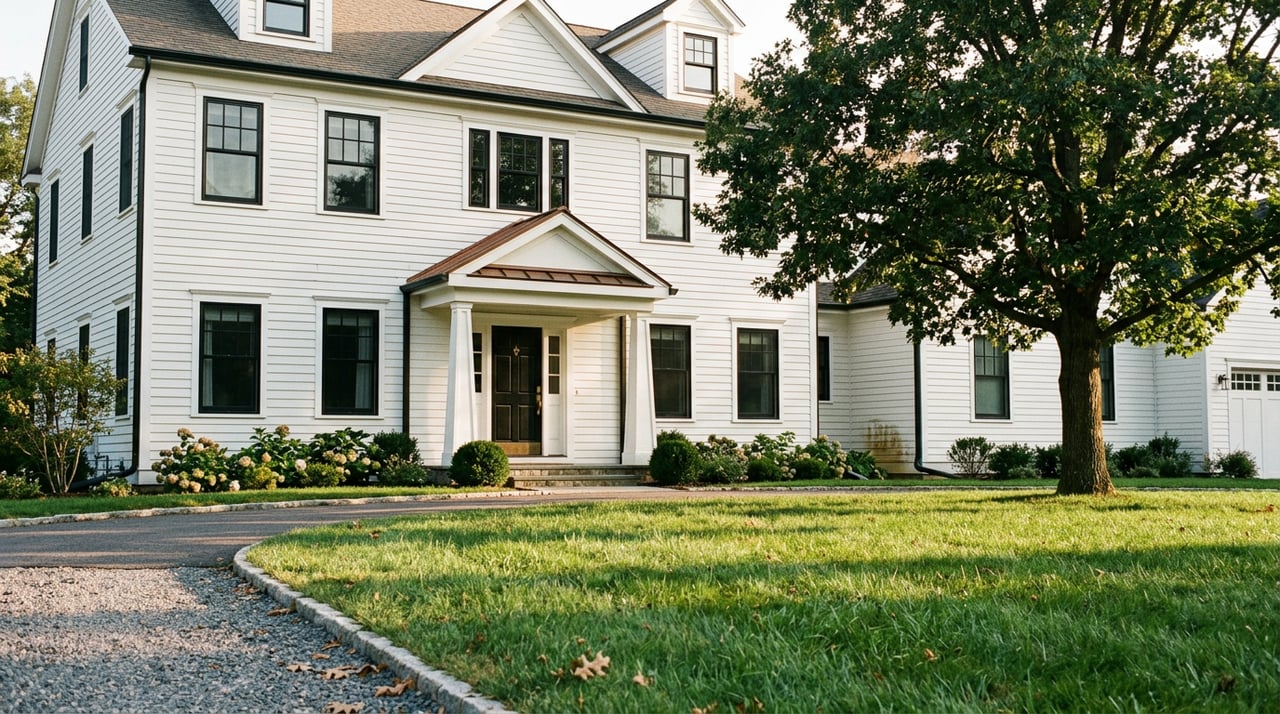
A buyer cross-shopping Long Grove against Buffalo Grove or Lincolnshire will eventually hit the same line in the listing sheet: no municipal property tax. It reads like a discount. Compare the two total tax bills side by side, though, and they land close enough that the difference rarely changes anyone's monthly payment. The line that's missing isn't the line that was doing the heavy lifting.
That gap between what "no property tax" sounds like it means and what it actually changes is worth understanding before you write an offer, because the same governance choice that erased that line is also the reason Long Grove looks the way it does on the ground: gravel shoulders instead of curbs, walking paths instead of sidewalks, a sheriff's deputy instead of a local squad car.
The 3 Percent Club
Long Grove's own finance department states it plainly on the village website: Long Grove is among roughly 3 percent of villages and cities in Illinois that do not impose a municipal property tax. Instead of a property levy, the village runs on a 1 percent municipal sales tax, an additional 1 percent non-home-rule infrastructure sales tax, building permit fees, vehicle stickers, fines, and video gaming revenue. It is a genuinely unusual funding model for a Chicago-area suburb, and it has been the case for decades, not a recent budget experiment.
The instinct that follows is reasonable: if the village isn't taxing you, your total bill should be meaningfully lower than a neighbor that does. That instinct is where the confusion starts, because a municipal levy is only one slice of what shows up on any Lake County tax bill, and it was never the biggest slice to begin with.
Where the Rest of the Bill Actually Comes From
Long Grove's finance office publishes a breakdown of where a typical resident's property tax dollar goes, based on 2018 figures averaged between Ela and Vernon townships. The village itself does not appear on the list, because it isn't collecting a property tax in the first place. Everyone else still is.
| Taxing body | Share of the bill |
|---|---|
| School Districts 96 and 125 | 75.1% |
| Fire/EMS | 7.5% |
| Lake County | 7.0% |
| Library | 3.6% |
| College | 3.2% |
| Forest Preserve | 2.1% |
| Township | 1.2% |
Three out of every four dollars on a Long Grove tax bill go to the school districts, and none of that changes because the village skips its own levy. The county, the library, the college, the forest preserve district, and the fire protection district all bill independently of Long Grove's decision, and at rates that look similar to what a homeowner in a neighboring town would pay those same bodies. Strip out the one line that Long Grove genuinely doesn't charge, and you're left comparing the same set of taxing bodies most Lake County residents already pay.
No property tax is not the same as low property taxes. It just means one fewer name on the list of people billing you separately.
What Long Grove Bought Instead of a Village Budget
The village has been direct about the trade-off on its own community channels. In response to a resident asking why Long Grove has no sidewalks, the village president laid out the arrangement plainly: minimal services in exchange for no municipal levy. Long Grove doesn't run large-scale water and sewer infrastructure the way many suburbs do. Police protection comes from the Lake County Sheriff's Office rather than a dedicated village police department. A large share of the village's roads are private, or maintained by the county and state rather than the village itself.
Planning and zoning work the same way. Long Grove doesn't staff a full-time in-house planning department. The village contracts that function out to SAFEbuilt LLC, a private firm that reviews zoning applications and development proposals on the village's behalf. For a resident applying for a straightforward permit, that generally isn't a problem. For someone planning a more complex renovation, addition, or new build, it means the review process runs through an outside contractor rather than a village employee who might otherwise be reachable for a quick informal question.
None of this makes Long Grove poorly run. It makes it a village that chose, deliberately and repeatedly, to keep its own footprint small.
The Vote That Locked It In
This wasn't an accident of budgeting that nobody got around to fixing. More than a decade ago, Long Grove put the sidewalk and road-funding question directly to voters in a referendum that would have created a small dedicated tax for road maintenance. Residents rejected it by a wide margin, with roughly 80 percent voting no. The village president who later discussed the vote noted that the low-tax model was part of what drew many residents to Long Grove in the first place, and that a proposal to reverse it, even a modest one earmarked for road upkeep, didn't have the votes.
That result matters for anyone touring homes in Long Grove today. The absence of sidewalks along many roads isn't an oversight waiting on a future infrastructure budget. It reflects a preference the village has affirmed at the ballot box, and it's reasonable to expect that preference to hold. Walking or biking to downtown shops from some subdivisions means sharing the road shoulder, not a separate path, and that's likely to remain true.
What This Means If You're Cross-Shopping Buffalo Grove or Lincolnshire
Both of those neighboring towns do collect a municipal property tax, and that difference shows up in what residents get for it. A village that levies its own tax generally has more room in its budget for things like a larger municipal road program, sidewalk construction, or an in-house planning staff that can walk a homeowner through a permit application without routing it through a third-party contractor.
For a buyer evaluating Long Grove against those towns, the honest comparison isn't "which town has lower taxes." It's closer to a question of what kind of infrastructure and services you're willing to trade for large lots, minimal HOA presence, and a village that keeps its own footprint small. If sidewalks, a dedicated local police department, or an in-house zoning office matter to your daily life, that's a real difference between Long Grove and its neighbors, independent of what your tax bill ends up looking like. If those things matter less to you than the acreage and the rural character Long Grove is known for, the missing municipal tax line stops being the deciding factor and the actual trade-off becomes the deciding factor.
Either way, the number to study on a Long Grove listing isn't the absence of a village levy. It's the combined rate from the school districts, the county, the fire protection district, and the rest of the taxing bodies that are still very much sending you a bill, because that's where almost all of the money actually is.
Frequently Asked Questions
Does Long Grove really collect zero property tax? Yes, at the municipal level. The Village of Long Grove does not levy its own property tax and funds village operations through sales tax, permit fees, and similar revenue instead. School districts, Lake County, the township, the library, the college, the forest preserve district, and the fire protection district still bill separately, and those levies make up nearly all of a typical Long Grove tax bill.
Why doesn't Long Grove have sidewalks? The village has described it as a direct consequence of its limited-government funding model. Building and maintaining sidewalks along village roads would require a larger public works budget than the current sales-tax-based model supports, and a referendum proposing a dedicated tax to help fund road and infrastructure improvements was defeated by a wide margin over a decade ago.
Could Long Grove start levying a property tax in the future? Nothing in the public record suggests that's under active consideration. The village has maintained this funding structure for decades and residents have voted to preserve the trade-off when it was put directly to them. Anyone buying long-term in Long Grove should treat the current setup as durable rather than transitional.
If you're weighing Long Grove against a neighboring Lake County town and want to talk through what that trade-off actually looks like for your specific search, Tami Hamilton can walk you through it property by property. Start Your Move — Schedule a Consultation.