Dreaming of room to breathe, space for horses, or a home that feels tucked away without being cut off from everyday convenience? Around Barrington, that lifestyle is real, but it comes with very specific property features, village rules, and upkeep considerations that matter before you buy. If you are exploring acreage or equestrian living in this part of the northwest suburbs, this guide will help you understand where to look, what to expect, and how to match the property to your goals. Let’s dive in.
Why Barrington draws acreage buyers
When people talk about acreage living around Barrington, Barrington Hills is usually at the center of the conversation. The village is about 40 miles northwest of Chicago and covers roughly 29 square miles, with large properties that range from 1 to more than 10 acres. The village also describes privacy and tranquility as defining features of the community.
That larger-lot pattern is reinforced by local zoning. Barrington Hills includes residential districts that begin at 5-acre lots, along with some 3-acre, 2-acre, and 1-acre districts in other areas. For buyers, that means the area is built around low-density living rather than standard suburban lot sizes.
It also helps to think beyond one village boundary. Barrington itself sits in the middle of a broader 90-square-mile area made up of seven independent villages and more than 47,000 residents. That is one reason many buyers search the wider Barrington area when they want land, privacy, and access to a recognizable town center.
What makes equestrian living possible here
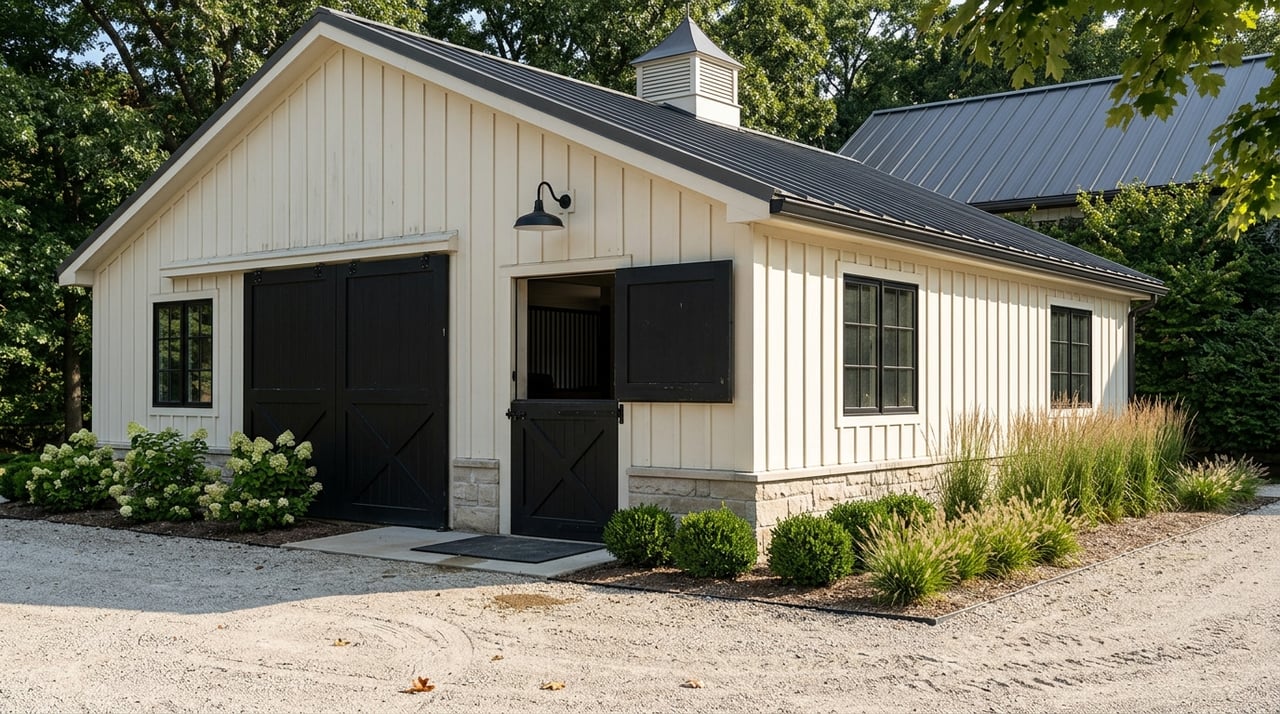
Barrington Hills stands out because horse use is not just tolerated, it is part of the local identity. Village materials state that residents can house, raise, ride, and breed horses on their own properties. The village also explicitly welcomes backyard barns and stables.
That matters because equestrian living is about more than owning open land. A property may need usable pasture, safe riding areas, storage, and structures that support day-to-day horse care. In this area, buyers often look for homes that already have at least some of that setup in place.
Many residents also use private riding trails, which adds another layer of appeal. If your goal is to ride from or near your property, the Barrington area offers a lifestyle that is hard to replicate in more conventional suburban neighborhoods.
Features to look for on acreage properties
If you are shopping for acreage or an equestrian property, square footage is only part of the picture. Land usability, layout, and improvements can have a major effect on how well the property fits your needs.
Common features buyers look for include:
- Barns or stables
- Horse stalls
- Tack or feed storage
- Paddocks
- Fenced pasture
- Long driveways
- Equipment storage areas
- Additional outbuildings
Barrington Hills notes that accessory structures are common in the area, but they still must comply with local setback and permit requirements. That means a barn, shed, fence, or other improvement may add value and function, but only if it fits current village rules.
What daily ownership looks like
Acreage living often feels peaceful and private, but it is usually more hands-on than a typical subdivision home. In Barrington Hills, that is especially true because the village does not provide water or sewer service. Most homes rely on private wells and septic systems.
The village recommends annual testing for private-well water. It also states that septic tanks usually need pumping about every three years. If you are moving from a home with municipal utilities, this is an important shift in both maintenance and budgeting.
Household services work differently too. Barrington Hills does not have municipal household waste pickup, so owners arrange private service for refuse and recycling. Depending on the provider, that can also include yard waste and manure pickup.
Why due diligence matters more here
With acreage, you are often evaluating more than a house. You may also be evaluating land condition, utility systems, fencing, drainage, outbuildings, and whether the property can support the way you plan to use it.
Barrington Hills states that no construction work may begin without required permits. The village also handles septic plan approvals and installation inspections. If you plan to add a barn, modify a paddock, install a fence, or build another structure, those details should be reviewed early.
The building rules also include specifics that can affect future plans. For example, fences can be solid up to six feet, and a shed under 200 square feet without electric or plumbing may not need a permit, though setback rules still apply. Those are the kinds of details that can shape what is practical on a given parcel.
Large-property ownership can also involve access and logistics that buyers do not always expect. Barrington Hills requires overweight permits for vehicles over 36,000 pounds on roads it maintains, and the village notes that spring freeze-thaw conditions can temporarily interrupt those permits. That may matter if you anticipate heavy equipment, construction work, or large material deliveries.
Trails and riding infrastructure near Barrington
One of the strongest reasons buyers consider this area is the riding network. Barrington Hills says the community has more than 150 miles of private and publicly owned trails. The Riding Club of Barrington Hills helps maintain bridle paths in cooperation with landowners and forest preserve partners.
The Barrington Hills Park District also operates a Riding Center with indoor and outdoor arenas that is open to the public. The Park District states that the center does not board horses, which is helpful to know if you are deciding between boarding and keeping horses at home.
Access rules can vary depending on where you ride. Barrington Hills notes that the Park District and the Cook County Forest Preserve District are separate organizations with different rules and fees. Buyers should not assume every trail system works the same way.
Cook County requires riders using its forest preserve trails, driveways, and paths to have a rider license and a horse tag. Lake County also requires an annual or daily permit on its equestrian trails. If trail access is a top priority for you, it is smart to confirm how your preferred property lines up with the trail network and permit structure.
Country setting with town convenience
Many buyers are drawn to Barrington because it offers a balance that can be hard to find. You can have land, privacy, and a more rural feel while still being connected to a well-established suburban center.
The village of Barrington highlights a downtown with Metra service, restaurants, and shops. That makes it easier for some buyers to pair a country-style property with commuter access and everyday conveniences. It is a different experience from living on acreage far from town services.
The broader area also includes outdoor destinations such as Crabtree Nature Preserve, Deer Grove, Spring Creek, Cuba Marsh, and Grassy Lake, along with access to the Fox River for boating and water recreation. For buyers who want outdoor space as part of daily life, that wider setting adds to the appeal.
Understanding the market niche
Acreage and equestrian homes around Barrington are part of a specialized market. Recent market snapshots cited 31 homes for sale in Barrington Hills, with a median listing price of $1.95 million and a median 54 days on market. Another recent report showed a median sale price of $1.2 million in March 2026.
Those numbers are not meant to suggest every property fits one pricing pattern. Instead, they show that this is a premium, thinly traded segment where listing prices, final sale prices, and market time can vary based on land usability, home condition, and the quality of outbuildings or horse facilities.
That is why comparing acreage properties requires more than checking bedroom counts or interior finishes. A parcel with better layout, more useful fencing, or a well-positioned barn may appeal very differently than one with similar square footage but less functional land.
Is acreage living right for you?
For many buyers, the Barrington area is a great fit if you want privacy, outdoor space, and room for horses, hobby farming, gardening, or other low-density uses. It can also work well if you like the idea of a property with a stronger lifestyle component than a typical suburban home.
It may be less ideal if your priority is low-maintenance living. Private wells, septic systems, larger grounds, and additional structures usually require more attention and more planning. That does not make the lifestyle harder for everyone, but it does mean the day-to-day experience is different.
The key is finding a property that supports how you actually want to live. Some buyers want full equestrian use, while others simply want more land, privacy, and a quieter setting near Barrington’s amenities.
How to shop smarter in Barrington
If you are considering acreage or equestrian property around Barrington, focus on the full picture rather than the listing photos alone. A beautiful home is important, but so are zoning, utility systems, structures, access, and how the land functions in real life.
As you narrow your options, it helps to ask:
- How much of the land is actually usable?
- Are the barn, fencing, and outbuildings set up for your intended use?
- What permits or approvals may be needed for changes?
- How do well, septic, and private waste service affect monthly ownership?
- What trail access is nearby, and what permits apply?
- Does the location balance privacy with the convenience you want?
When you have clear answers to those questions, you are in a much better position to buy with confidence. In a niche market like this, the right guidance can help you separate a property that simply looks impressive from one that truly fits your lifestyle.
If you are exploring acreage, equestrian homes, or lifestyle property around Barrington, working with a local guide can make the search far more efficient. Tami Hamilton can help you evaluate the land, the location, and the practical details so you can find a property that fits the way you want to live.
FAQs
What makes Barrington Hills different for acreage buyers?
- Barrington Hills is known for larger properties, low-density zoning, and a setting where privacy, open land, and horse-friendly living are central features.
What should you look for in a Barrington equestrian property?
- Look beyond house size and review features such as barns, stalls, tack storage, paddocks, fenced pasture, outbuildings, and the overall usability of the land.
What utility systems are common on acreage homes in Barrington Hills?
- Most homes in Barrington Hills use private wells and septic systems because the village does not provide water or sewer service.
What maintenance tasks are common with Barrington Hills acreage homes?
- Common ownership tasks include annual well water testing, periodic septic pumping, managing larger grounds, and arranging private refuse and recycling service.
What should buyers know about horse trails near Barrington?
- Barrington Hills has extensive trail infrastructure, but access rules vary by organization, and some public trail systems require rider licenses, horse tags, or permits.
What kind of buyer is a good fit for acreage living around Barrington?
- Acreage living often fits buyers who want privacy, outdoor space, and room for horses or other land-based uses, and who are comfortable with more hands-on property maintenance.