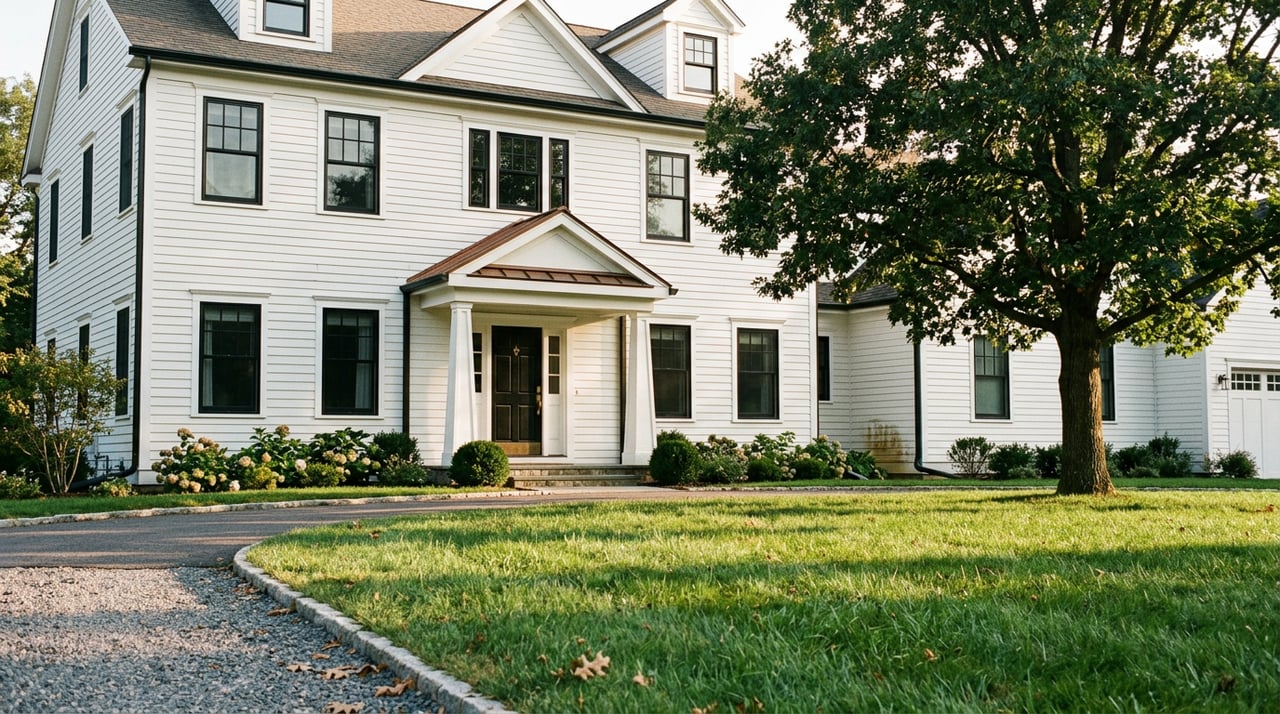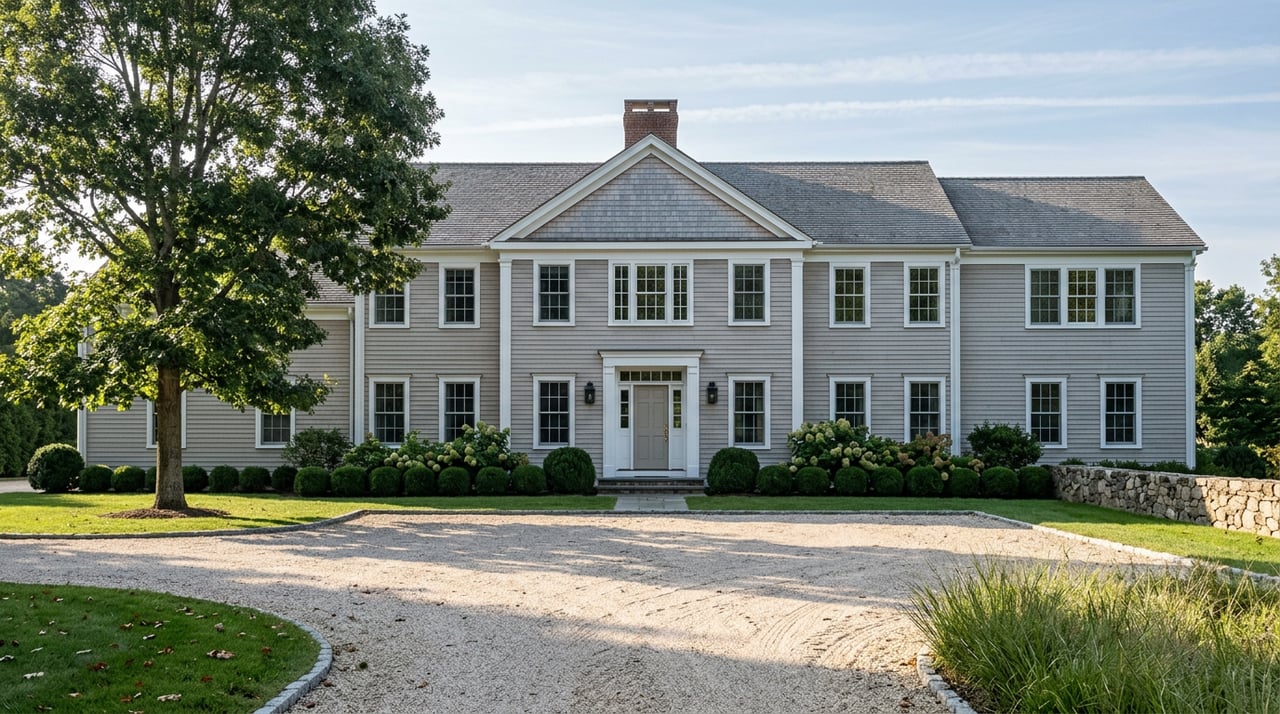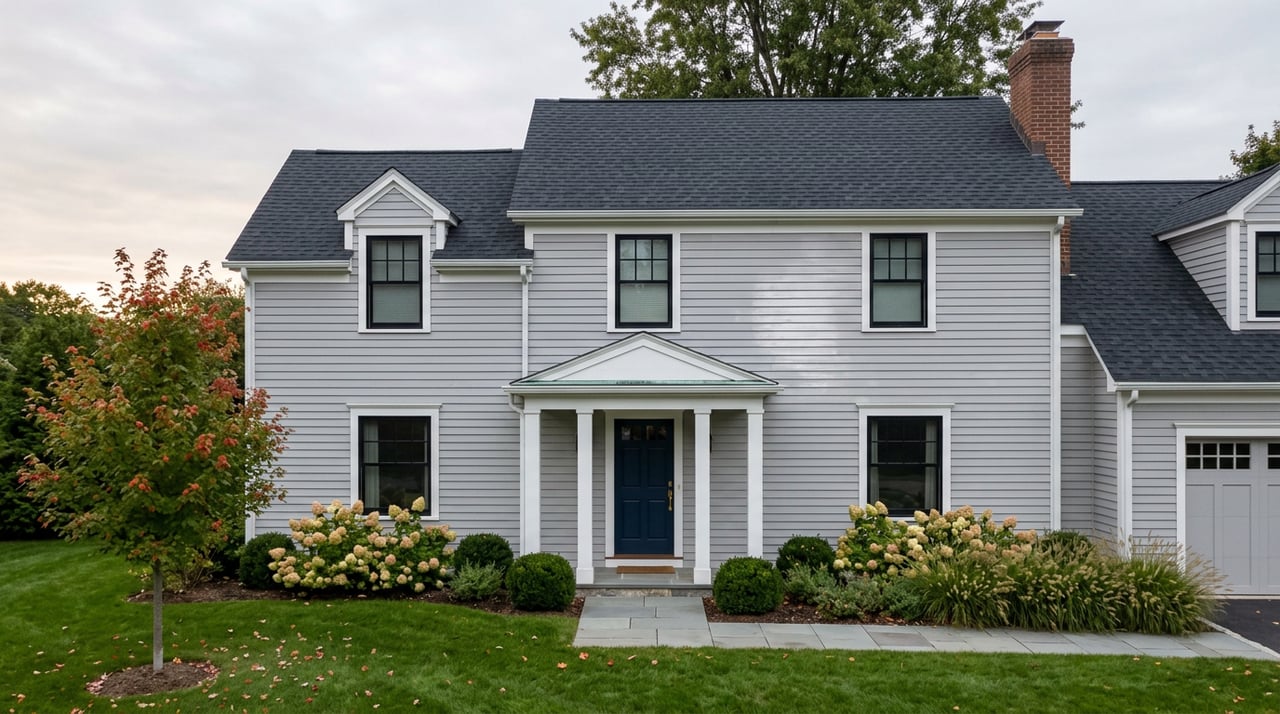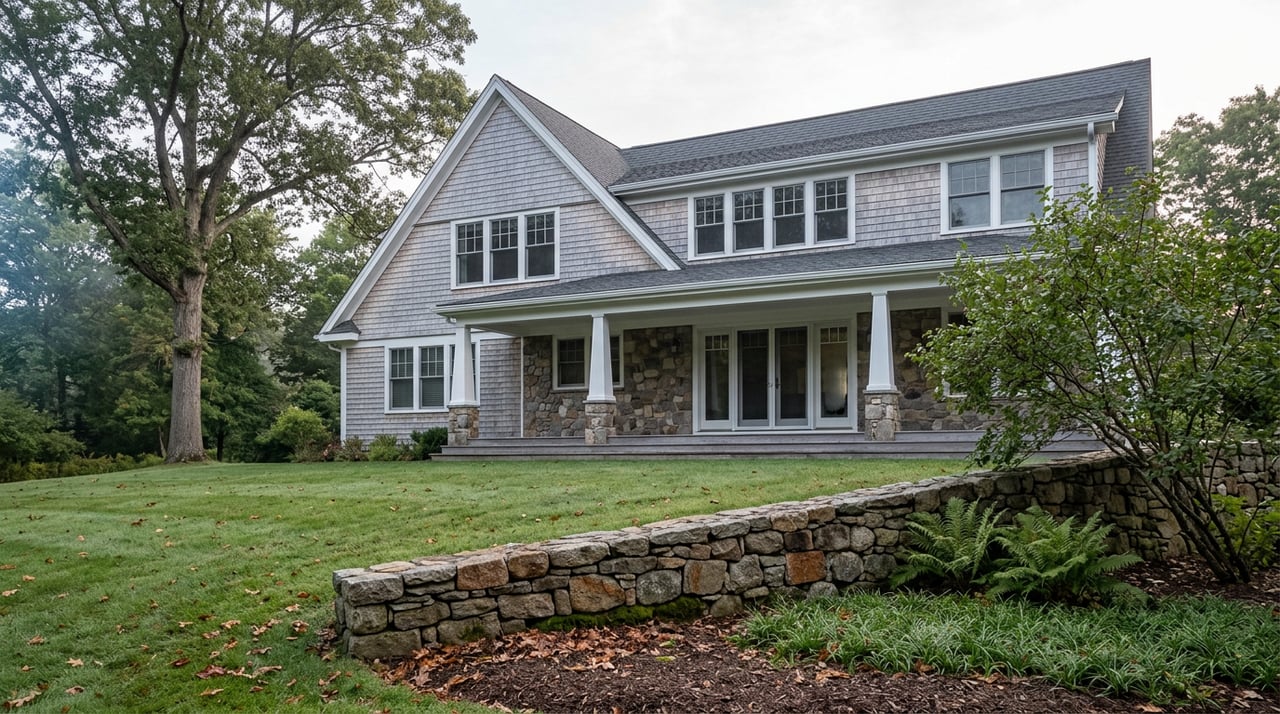
In April 2025, Lake Forest's Zoning Board of Appeals sat down to consider a basement expansion on Overlook Drive. Nothing dramatic on its face. A homeowner wanted to dig out more living space below grade. But the file told a more interesting story than the request itself.
The house had been built in full compliance with the setbacks in effect at the time. Somewhere in the years since, the city adopted a steep slope setback rule, the kind of ordinance meant to keep construction away from unstable ravine edges. The rule wasn't written with this house in mind, but it swept the house up anyway. A significant portion of the existing structure now sat inside a setback line that didn't exist when it was poured. The home became legally nonconforming without anyone touching a shovel. The board's staff report even noted that the architect who designed the home, Bob Roloson, had designed many of the houses on that stretch, which means the same exposure likely runs through several of the neighbors' lots too. The board approved the addition, but only with real limits: the new space capped at three feet six inches above grade, a landscape plan required, and conditions to keep light from the skylights spilling onto the ravine below.
That case is a small variance on one street. But it points at something buyers comparing Lake Forest to other North Shore towns tend to miss entirely: the number on the deed and the number that determines what you can actually build are not the same number, and the gap between them is bigger here than almost anywhere else in Lake County.
The Acreage Illusion
Shop Lake Forest by price per acre and the market looks irrational. Recent closings make the point better than any explanation. A home on roughly a quarter acre near downtown sold for $1.695 million. Around the same time, a home on nearly two acres elsewhere in the city sold for $1.33 million, marketed heavily on its walk-to-town location rather than its land. By the simple math of price divided by lot size, the smaller property should have been the bargain. It sold for more.
The instinct to explain this away with location alone is reasonable, but incomplete. Location matters, and walkability to Market Square carries real weight. What it misses is the other lever: how much of that larger lot is actually available to build on once ravine and steep slope setbacks are drawn across the plat. A two-acre parcel with a ravine cutting through the buildable envelope can leave a homeowner with less usable footprint than a flat quarter acre a few blocks from the train.
On Lake Forest's east side, the deed tells you how much land you own. The setback line tells you how much of it you're allowed to use.
Why the City Drew the Line Where It Did
Lake Forest sits on a bluff above Lake Michigan, cut through by a network of ravines that have been eroding, slowly and sometimes not so slowly, for well over a century. The city's response was to write steep slope and ravine setback requirements into its zoning code, restricting how close new construction, additions, and even accessory structures can sit to those slopes. That's sound stewardship of unstable ground. It's also a rule that arrived after most of the housing stock was already standing.
The result is a quiet population of nonconforming homes concentrated on ravine-adjacent and lake-adjacent streets, houses that were built to the standards of their decade and now sit closer to a slope than current code allows. None of that makes them unsellable. It does mean that expansion, whether it's a basement dig-out like the one on Overlook Drive or a full addition, routes through the Zoning Board of Appeals and often the Building Review Board, which reviews substantial exterior changes, new construction, and some demolitions across the city. That review adds time, documentation, and sometimes a hard ceiling on what the next owner can add, regardless of how much acreage the listing advertises.
Two Different Markets Under One ZIP Code
The price data backs up what the ravine lots suggest. Lake Forest isn't one market wearing one median price. It's at least two, and they're moving in opposite directions.
| Submarket | Median sale price | Window | Change vs. prior year | Days on market |
|---|---|---|---|---|
| Citywide | $1.3M | 3 months ending May 2026 | down 3.4% | 49 |
| Downtown / lakefront core | $1.74M | 3 months ending May 2026 | up 51.1% | 56 |
The citywide median actually softened over that stretch even as the downtown, lake-adjacent core ran up more than 50 percent year over year. That's not a contradiction. It's two different buyer pools bidding on two different products. Downtown and lake-adjacent buyers are paying for walkability, historic character, and proximity to the water, and they're absorbing the ravine and steep slope constraints as part of the cost of that address.
West side buyers are shopping a different product entirely. Conway Farms, the newer-development pocket near the West Lake Forest business district and Metra stop, posted a median sale price of $1,088,500 as of March 2026, with active inventory ranging from an $850,000 townhome up to a $3.695 million estate on a 2.18-acre lot. These are largely flat, buildable parcels without ravine exposure, which means the acreage on the listing sheet behaves the way buyers expect it to. What you see in the lot size is much closer to what you get in the buildable envelope.
The two Metra stations reinforce the split. The downtown Lake Forest station runs on the Union Pacific North line. West Lake Forest, on Telegraph Road, runs on the Milwaukee District North line. They're two different commutes serving two different halves of one city, and the housing stock on either side reflects that same divide.
What to Check Before the Acreage Sells You
For a buyer comparing Lake Forest against other Lake County towns on price per acre or price per square foot, the numbers only mean what they claim to mean on the west side. On the east side and anywhere the lot backs onto a ravine or bluff, the acreage figure needs a second question behind it: how much of this is actually buildable.
A few things worth asking for before writing an offer on a ravine-adjacent or lake-adjacent property:
- A current plat of survey that shows the steep slope and ravine setback lines, not just the property boundary.
- Whether the home is already flagged as legally nonconforming, and if so, under which provision.
- Whether recent additions or garage replacements in the immediate area required a Zoning Board of Appeals variance, which is a reasonable signal for what future work on your own lot might require.
- Whether Building Review Board sign-off will apply to the kind of project you're planning, since that review sits on top of standard permitting for substantial exterior work.
None of this makes a ravine lot a bad purchase. Some of Lake Forest's most distinctive properties sit exactly there, and the privacy and tree cover that come with a ravine setting are part of why buyers pay for the address in the first place. The point is narrower: treat the deeded acreage as a starting question, not a finished answer.
Three Questions Worth Asking Before You Compare Lake Forest to Anywhere Else
Does a bigger lot always mean more house down the road? Not on Lake Forest's east side. A larger parcel with ravine exposure can leave less usable building area than a smaller, flat one closer to downtown.
Is the whole city moving the same direction on price? No. The three months ending May 2026 showed the citywide median down 3.4 percent year over year while the downtown, lake-adjacent core was up 51.1 percent over the same stretch. Read any single "Lake Forest median" with that split in mind.
Does the west side carry the same setback risk? Generally no. Conway Farms and the flatter west-side parcels near West Lake Forest's Metra stop don't carry the ravine exposure that drives nonconforming conditions on the east side, which is part of why acreage there tracks more closely with expectations.
Where This Leaves You
The lesson from Overlook Drive isn't that ravine lots are a trap. It's that the acreage number on a Lake Forest listing tells you less than it appears to, and the gap between deeded land and buildable land is exactly the kind of detail that only shows up once you're deep enough into a transaction to ask the right questions. Comparing Lake Forest to another Lake County town on price per acre without accounting for that gap is comparing two different things and calling them the same.
If you're weighing Lake Forest against other North Shore or Lake County communities, or trying to figure out which side of this city actually fits what you're picturing, Tami Hamilton has spent two decades working these streets and knows exactly which blocks carry ravine exposure and which don't. Start Your Move: Schedule a Consultation.